Unfortunately, we missed the chance for a better scenario several years ago.
But hey – have a consolation prize.
A little chocolate to sweeten your naivety?
Take a look at a more realistic level.
Oh – you still believe in a perfect world?
Did you really think there was a better scenario?
You dreamer, you.
Unfortunately, we can’t turn back time.
The past is gone for good.
Can’t handle reality?
It’s okay – we’ve got something to help you.





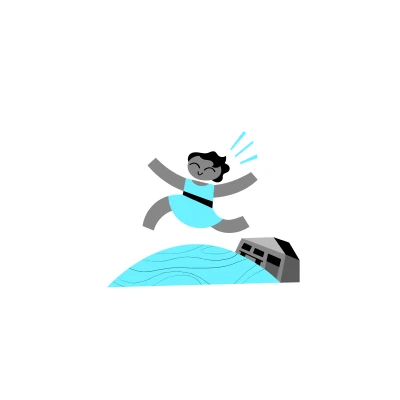
Helmet requirement for tourists?
Climate change is increasing the risk of natural hazards in many parts of the Alps. Permafrost thaw and glacier retreat reduce slope stability, increasing the danger of rockfalls and landslides. The frequency of rockfall events has risen in recent years, particularly in high-alpine regions.
-
Mountain forests provide crucial protection against natural hazards such as rockfall and avalanches. They safeguard lives and infrastructure. back to Loss of Protection Forests
-
Individual debris flows and landslides occur particularly where heavy rainfall has destabilised the subsoil. back to Heavy Precipitation
-
For once, some good news: less snow means less risk of dry snow avalanches. back to Drought
-
A warmer climate increases the likelihood of rain-on-snow events, raising the risk of wet snow avalanches. back to Heat
-
As tree vitality declines, forests lose their stabilising function for the soil. back to Tree Vitality
-
As permafrost thaws, mountain slopes lose stability. This leads to more landslides and rockfalls. back to Permafrost
The warmer it gets, the greater the risk of rockfalls, debris flows, and landslides from high elevations – even in areas that were previously stable.
A helmet no longer helps much when entire settlements and infrastructure are at risk. Brienz (GR) will not be the last village to be evacuated.
The good news: the risk of dry snow avalanches will decrease in the future. The bad news: (more destructive) wet snow avalanches from higher elevations will increase.
-
The importance of forests as protection against rockfall, debris flows, and landslides increases. back to Loss of Protection Forests
-
In mountain regions, landslides and debris flows become more frequent, especially on steep and unstable slopes. They can also endanger settlements and roads. back to Heavy Precipitation
-
Less snow also means fewer dry snow avalanches – particularly at lower elevations. back to Drought
-
In (high) alpine areas, heat can alter underground water flow, triggering landslides and debris flows. back to Heat
-
Large-scale tree mortality further increases the risk of rockfall and landslides in steep terrain. back to Tree Vitality
-
The warming of permafrost leads to a loosening of the subsoil, further increasing the risk of debris flows and rockfalls. back to Permafrost
When ground ice in former permafrost areas turns to water, slip surfaces can form between rock masses. Huge masses can begin to slide.
If permafrost no longer holds the subsoil in place, extreme heavy rainfall can mobilise rock material and trigger further hazards.
At least one thing remains true: where there is no snow, there are no avalanches.
-
Where protection forests lose their effectiveness, costly technical structures such as rockfall nets must be installed. back to Loss of Protection Forests
-
Valleys and settlements can be cut off from the outside world by landslides and debris flows. back to Heavy Precipitation
-
If several winters in a row bring very little snow and warmer temperatures, avalanches below roughly 2,200 m above sea level will not occur. back to Drought
-
Extreme heat can dry out and lead to the subsidence of loose slope material, which can set it in motion. back to Heat
-
The risk of rockfall, landslides, and debris flows increases dramatically. back to Tree Vitality
-
Permafrost thaw can fundamentally alter subsurface stability. Debris flows and landslides may reach enormous dimensions. back to Permafrost
That's it. RIP.
That's a bit too much.
Maybe go down a level?
Got it – you're really into extremes.
Game over.
Try a different level.
That extreme? You’ll find the matching soundtrack here.
We’re done with this planet.
On to the next!



Solutionsfor: Gravitational Natural Hazards
Monitoring and early warning systems help protect people and animals in the short term. The Swiss Federal Government's Natural Hazards Portal provides comprehensive information on current risks and supports the assessment of gravitational hazards.
The designation of hazard zones assists spatial planning and must keep pace with ongoing climate change.
What is the situation in your area? Link
Technical protective structures such as galleries, avalanche barriers, and debris flow nets provide local protection – though they also lighten taxpayers’ wallets.
In the long term, protection forest management, slope restoration, and the promotion of biodiversity are the most effective measures.
Nature is not the enemy – it is an ally.